Sketch of the Week: Young Dali (Sept 9, 2024)

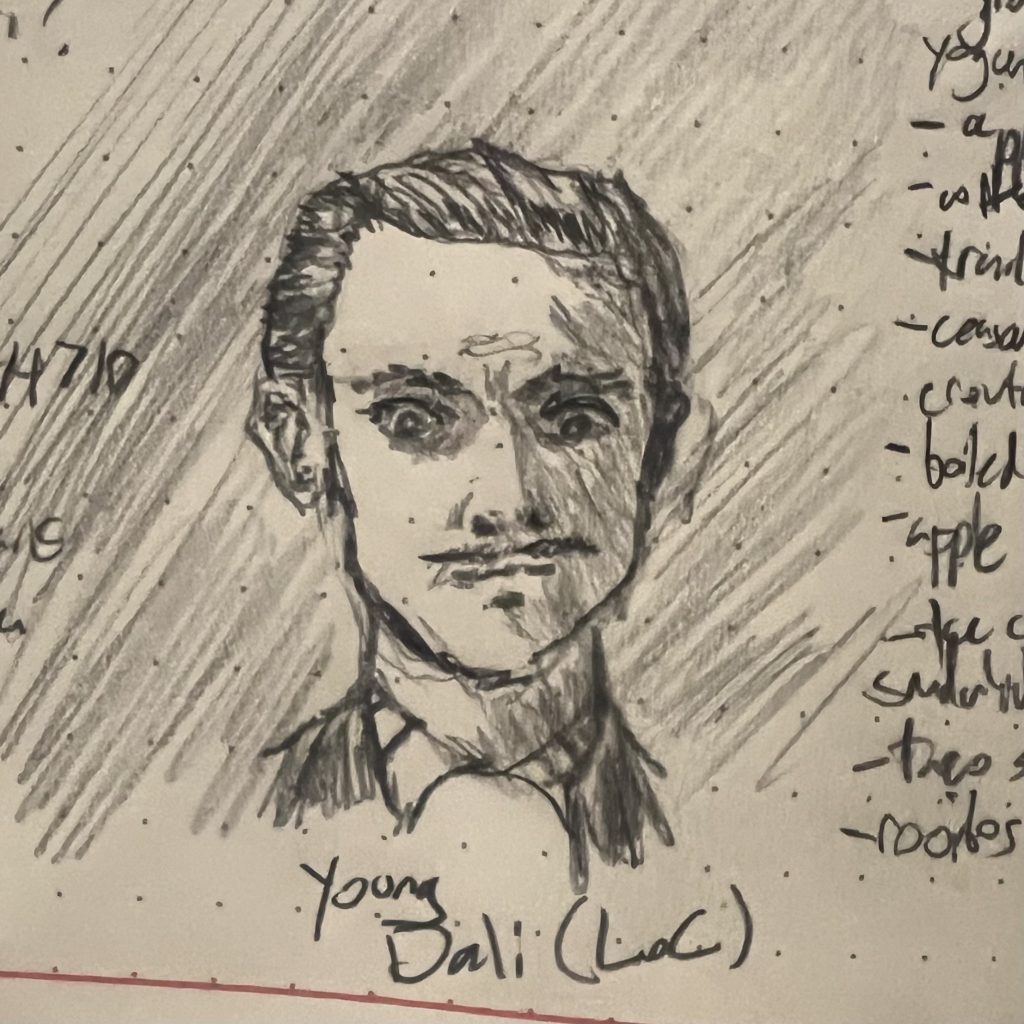
My best sketch from Week #37-2024 is this one of a young Salvador Dali:

Pencil sketch of a young Salvador Dali with slicked-back hair, a pencil mustache, and patented Dali Crazy-Eyes (tm)

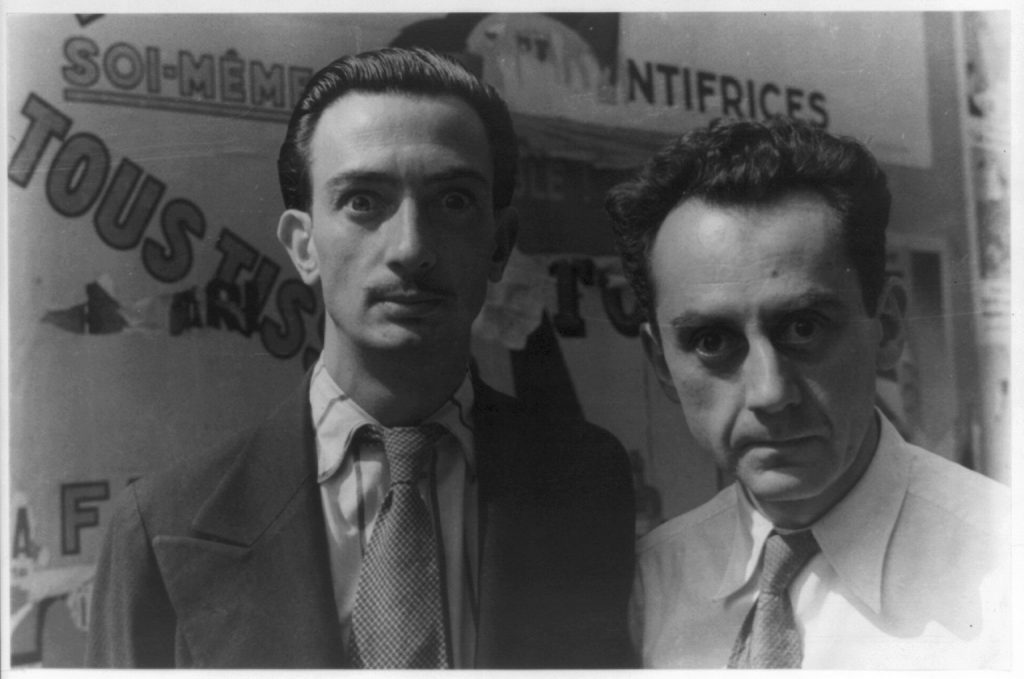
My reference for the sketch was this picture of Dali and Man Ray I stumbled across on the Library of Congress website:

A picture of Salvador Dali and Man Ray, both giving Crazy Eyes. This picture was probably taken at the Théâtre de la Gaîté-Montparnasse exhibition in Paris by Carl Van Vechten on June 16, 1934.

Until I saw this photograph, it never dawned on me that Man Ray might be Jewish (which he was), nor that he was American-born (I thought he was French, because he was most famous for the work he did while living in France), nor that he thought of himself as a painter (I knew him for his photography). 🤦‍♀️


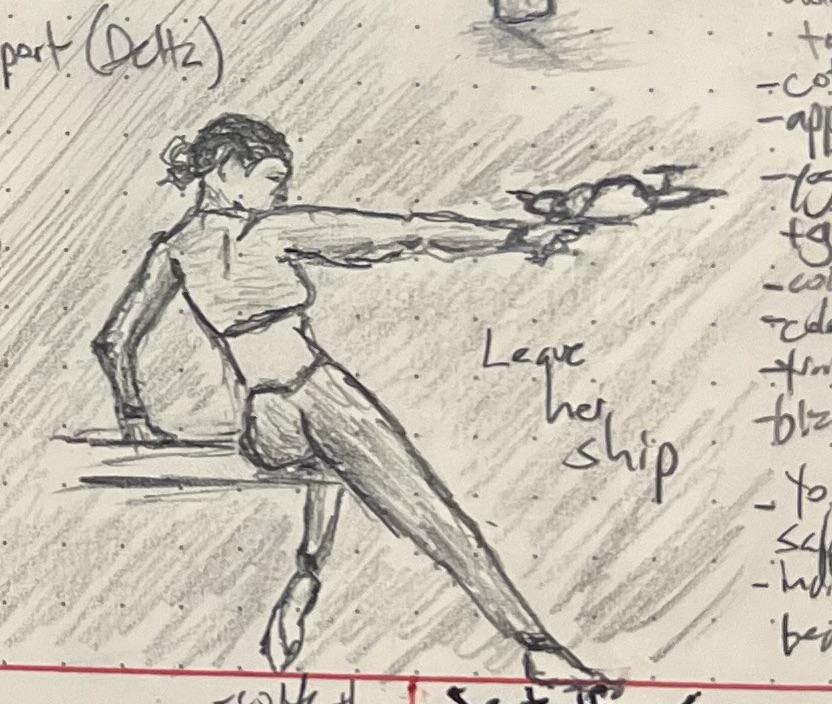
For the record, the Young Dali sketch narrowly beat out this space captain from Friday, September 13. She is taking no shit, folks:

A pencil sketch of a space captain aiming her blaster off screen to the right. Leave her ship!

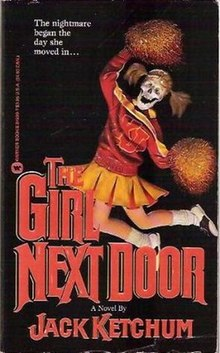
I should not have read Jack Ketchum’s THE GIRL NEXT DOOR (a zero-stars review)

(I do a fair bit of reading, which I track over on Goodreads. Trying to move some of that value over here, prior to the inevitable enshitification.)

This book was notorious when I was a kid for being so extreme and gruesome. Straight talk: it’s not that gruesome. Yes, there are graphic depictions of torture and sexual violence that are basically in the ballpark of stuff happening in conflict zones right now. That this really happens to real people is gruesome and outrageous; that some guy typed it up in 1989 feels trite.

Anyway, what really is truly extreme and gruesome in this book is its absolute moral cowardice. Ketchum sets up an interesting premise–not the sex torture of the orphaned girl next door, but the narrator’s (David’s) complicity, how he lets awfulness roll forward despite liking this girl, despite being a “good guy” and “All-American Kid” (echoes of King’s “Apt Pupil” there).

That premise is interesting, because it matches the vast majority of us: we’re good people, and we let bad things happen all over the world all the time.

The problem is that Ketchum pulls the punch. Inexplicably, he attempts to transform David into a hero in the final act–despite the fact that there’s no set-up for it, and Ketchum seems entirely incapable of pulling it off. That might be fine; it could still be a solid three-star book if David tried to play the hero, then faceplanted (as he does in the novel, as he must, because the situation is so hopeless), and Megan (the victim of these outrages and everyone’s leer, readers included) had poured her fury and rage out on him.

Instead Ketchum paints this kid–this coward, this bystander, this rapist-by-proxy and torture fanboy–as the hero, and forces Meg to be his forgiving damsel.

And it just makes me want to fucking vomit. It’s a mediocre book that’s only shocking if you’ve never read a newspaper’s international headlines. It’s an advertisement for never holding anyone accountable for anything–save for the victims; “What was she doing alone with those boys? What did she expect, dressing like that” and so on and so forth ad nauseam, ad infinitum, world without end, amen 🤮


Antisemitism in Ann Arbor, MI (July 7, 2024)

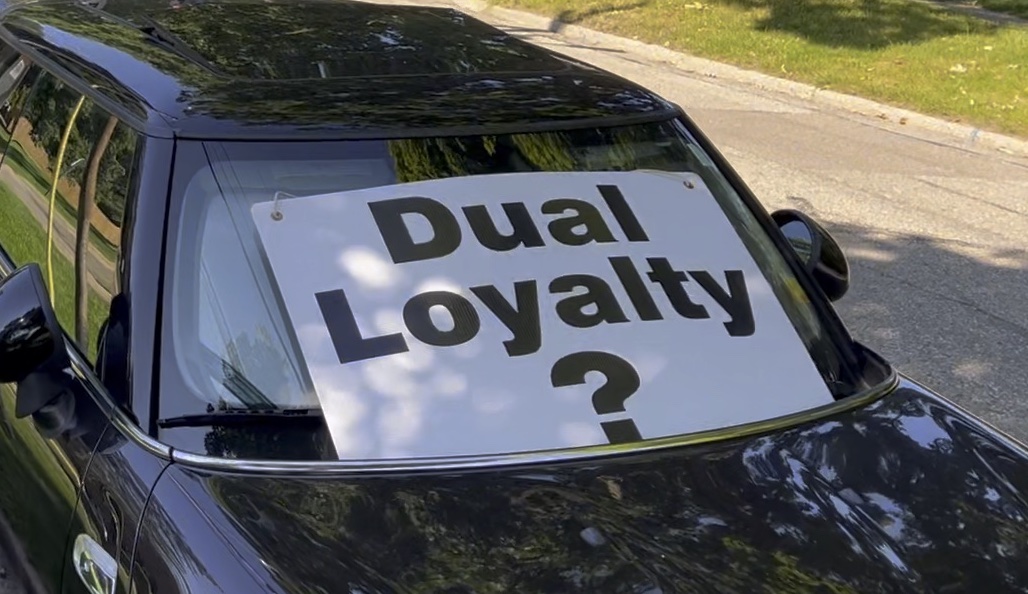
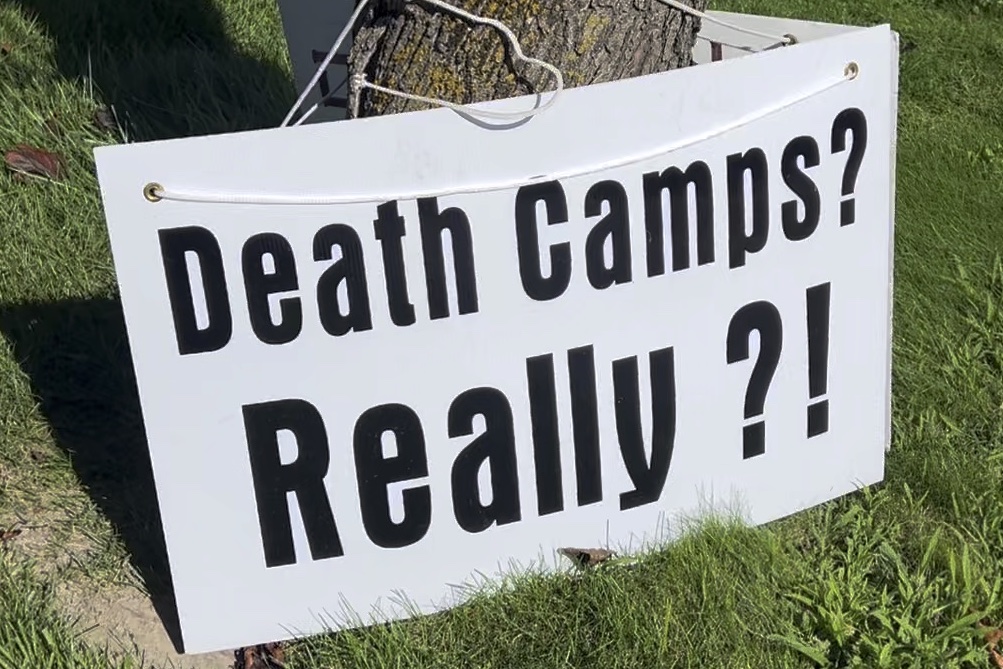
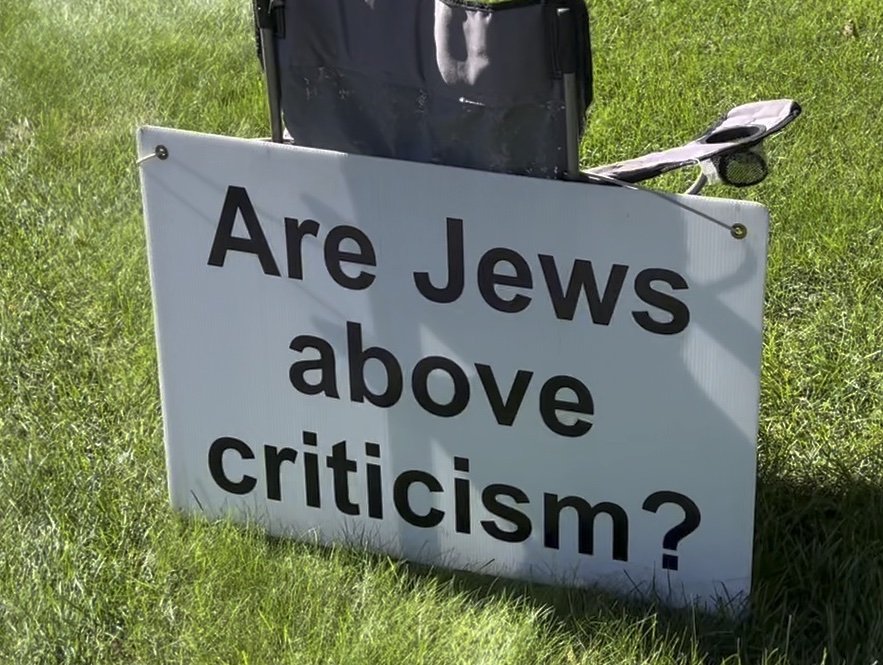
I’m mostly posting this for archival/documentary purposes. But I’m also posting this because I think that the “Is anti-Zionism antisemitic?” argument is stupid; you can go to these protests and demonstrations yourself, or look at comprehensive coverage, and decide for yourself if what you see is primarily motivated by a love of the Palestinian people or a loathing of Jews.


I captured all of these video at the weekly protest held outside Beth Israel Congregation each Saturday, during morning Shabbat services. This protest has been held mostly weekly for the last couple decades, and has been mostly the same throughout that period. The pictures show all of the signs that were on display that day. Some have been the same for years (I’ve lived less than one mile from this site for 20+ years), others are relatively new. I think only “Jews Bomb Hospitals” and possibly “Jews Bomb Churches” are new since the pogrom of October 7 and intensified bombings of Gaza. The entire video of my stroll past the demonstration is included at the bottom, for those curious.

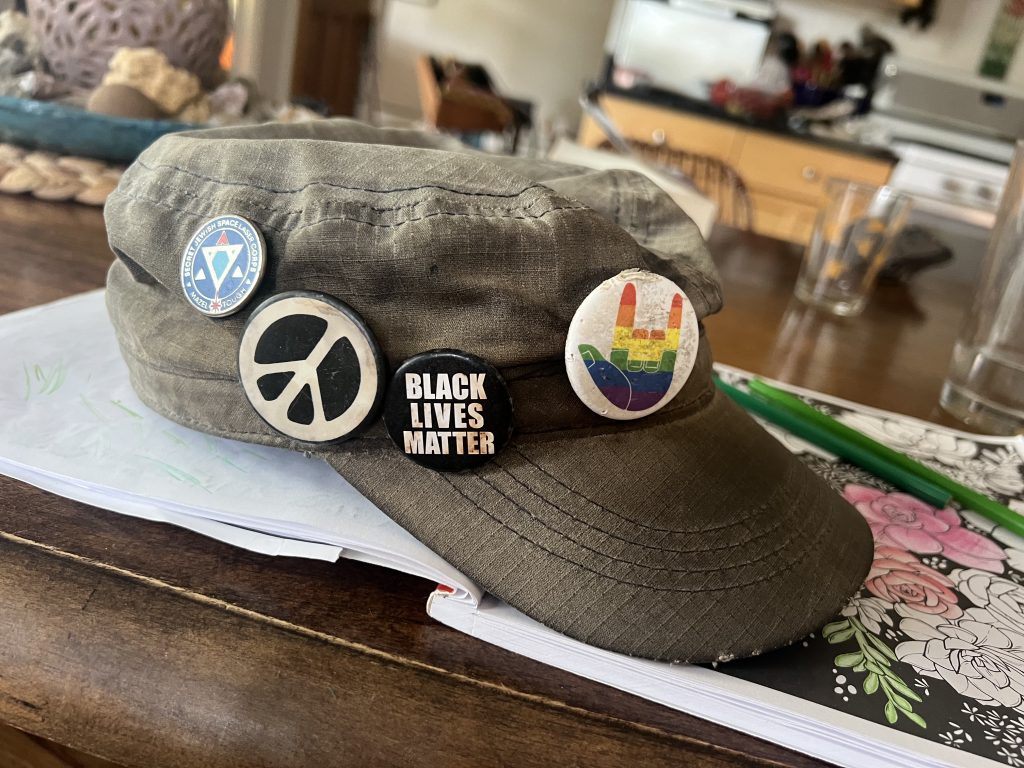
I never spoke a word to these men, nor was I wearing anything inflammatory. I had on a plain black shirt and this hat, which I wear basically everywhere:

A fairly beat-down green brimmed baseball cap with four buttons on it. The buttons show: 1) a "love" hand in rainbow colors, 2) the text "BLACK LIVES MATTER", 3) a peace symbol, and 4) a stylized Jewish star and the text "Secret Jewish Space Lasers Corps: Mazel Tough"

I wouldn’t rule out that these two protestors knew I was a Jew: the “Jewish Space Lasers” button on my hat is pretty legible (folks have complimented me on it) and, besides, I’m active in Jewish communal life here, and it’s just not that big of a community.

I mention this because near the beginning of the video you can hear the mustachioed protestor begin by talking about dead Palestinians (reasonable, at a nominally pro-Palestine demo) and then abruptly switching gears to talk about the “fact” that gas chambers never existed. I don’t know why he jumped topics like that, although I’d been warned that these two men (who both wear GoPros) would try to goad me into a fight. A portion of their signs are clearly intended to offend, and especially to offend Jews–like the families with small children who were arriving to attend religious services as I arrived.

“the only thing in life that’s really worth having is good skill”—Jerry Seinfeld

I do not endorse Seinfeld or Seinfeld (no deeply held conviction or ideological bone to pick there; he just never particularly worked for me, as a comedian or writer), but I do wholeheartedly endorse both the above sentiment, and reading the entire op-ed it came from (here’s a gift link 🎁🔗 ):

Opinion: The life secret Jerry Seinfeld learned from Esquire[*]

The takeways summarized in the op-ed are good and worth your time, and the core message is a fundamental truth:

Dedicating yourself to the mastery of a craft—against all odds and despite all distractions and obstacles—is the only path along which there is relief.

Along these same lines—delving into and reflecting on what it means to dedicate yourself to craft—I likewise wholeheartedly endorse this documentary (noting that, over the last decade I’ve revised my opinion on it in at least one important detail: although I still love the documentary, I no longer even mildly like any of these comics).


[*] I also don’t endorse Esquire—again, it never really worked for me is all. I do endorse the Washington Post, though. I read a lot of news reporting from a lot of sources, and there’s is consistently the most even-handed and makes the most honest attempt at being honest and accurate, in my humble.

I can’t shake the feeling that there is something vaguely antisemitic about this situation . . .🪄🐇👿

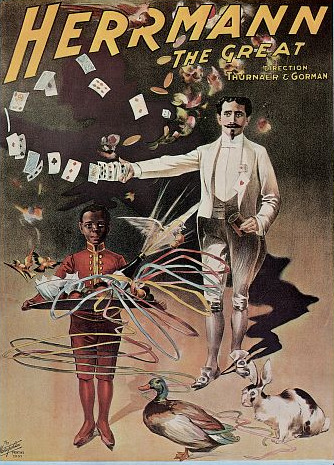
Holy Moses! The “suave devil look” for magicians (goatee, tuxedo, etc.) was invented by a Jewish magician named “Herrmann” (which I think is German for “Mr. Man”—which just so feels like a name assigned by a census taker who was fed up with weird Yiddish shtetl names he couldn’t spell) who performed for Lincoln!

New York Times: “How a 1933 Book About Jews in Magic Was Rescued From Oblivion” (🎁 gift link)

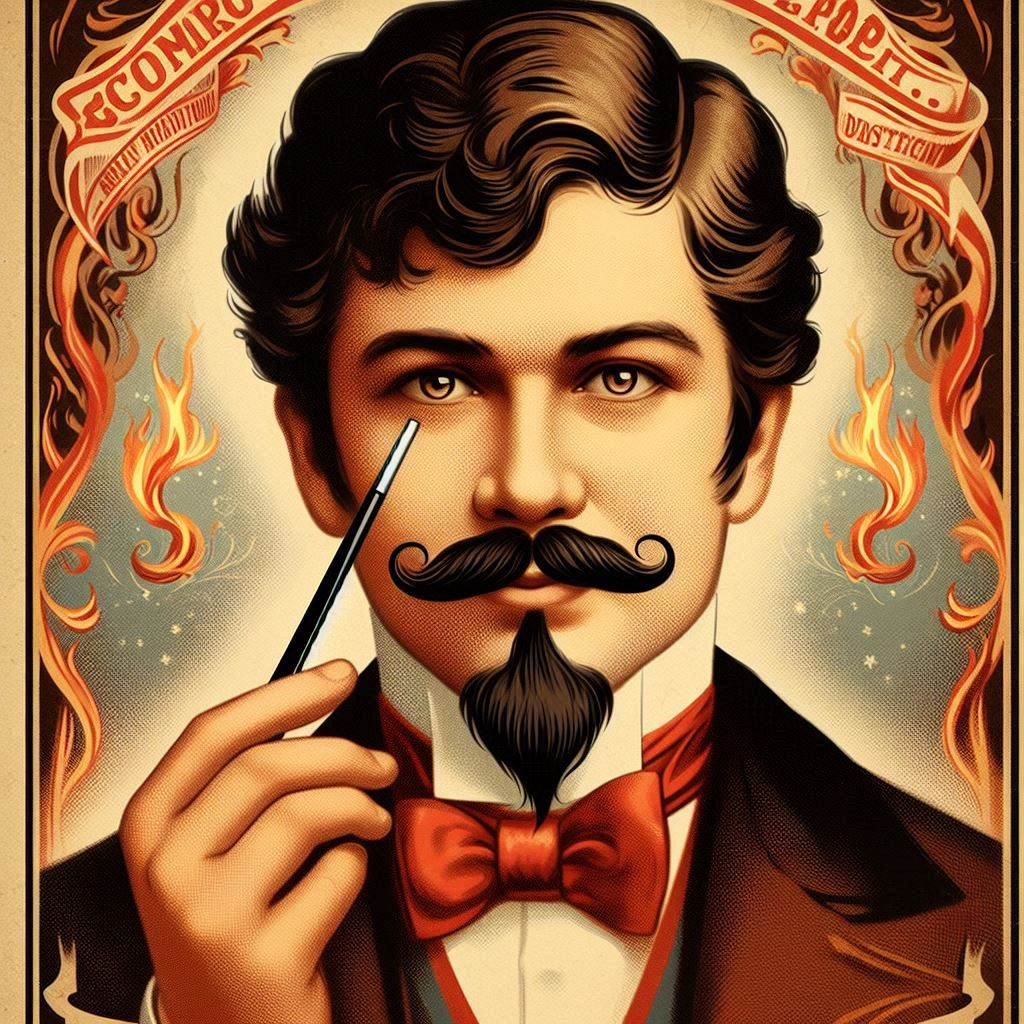
In fact, Herrmann (shown in the picture at the top, courtesy of his Wikipedia entry) is so synonymous with the look that if you prompt an A.I. with “create a poster for an 1800s stage magician. The magician needs a goatee” it gives you a picture of this otherwise obscure 19th Century French stage magician:

A.I.l generated image from the prompt “create a poster for an 1800s stage magician. The magician needs a goatee.” The result is a stereotypical "suave devil" stage magician--and happens to be a nearly spot-on portrait of 19th C Jewish magician Alexander Herrmann

A Canticle for Leibowitz ★★★★★

(I do a fair bit of reading, which I track over on Goodreads. Trying to move some of that value over here, prior to the inevitable enshitification.)

This is a re-read (or really a re-listen for me). The first time I read A Canticle for Leibowitz I was maybe 17 at the oldest, so almost three decades ago now. Reading old books is a comfort, because it reminds us that even our most painfully modern woes—A.I.! Self-driving cars! A broad American passion for alluring misinformation coupled to a contempt for facts spoken by the “wrong” side!—were old and well-worn decades before I was born. This books is from 1959, and it’s third section literally opens with a guy working in his office and getting super frustrated with the malfunctioning A.I. he’s trying to dictate a letter to. Soon thereafter he and his subordinate have to dodge autonomous semis while crossing the street to get to the cafeteria. 😂

Setting aside Canticle‘s mild antisemitism(*), it’s refreshing to read religion in a scifi book written by someone who doesn’t have contempt for religion, but neither idealizes it, either. Miller (who I understand to have been a devout Catholic by the time he wrote the novel) respects that religious institutions, like any and all institutions, are political and can be petty, because they are operated by humans (who are political and petty). But he also highlights that religious institutions aren’t *just* petty political vehicles. He acknowledges the reality that people don’t cleave to religion out of fear or contempt or cruelty or because they hate the Other, but rather out of love and comfort and, believe it or note, a true and legitimate desire to bring about a good and just world.

We have religion in America now—right alongside our malfunctioning A.I. and glitchy self-driving cars. We’re gonna have it in the future. It’s absence in scifi is as weird and non-credible as the bizarrely small number of Black people in the Detroit depicted in Robocop.


(*) A “Wandering Jew” character plays a major supporting role in all three sections of this A Canticle for Leibowitz. I think enough people categorize the “Wandering Jew” as a foundational antisemitic trope that this should be a fairly non-controversial opinion. But I also know how the Internet works, so if you’re legit interested in discussing what precisely reads as antisemitic to me in this novel, feel free to reach out. Happy to chat.

“Who’s Coming to Hurt Us?”[UPDATE] ✡︎

An interesting take on some recent research:

Who Are the Least and Most Antisemitic Americans by Ideology?

“The upshot is that the least antisemitic Americans are mainstream liberals and conservatives. The most antisemitic are the extreme left, the extreme right, as one of the theories noted above suggests, but also low information voters, who skew survey results by often self-identifying as “moderate.””

In other words, modern Jew-hate in America isn’t a right-wing thing (as most progressives insists), nor a horseshoe (as often seems to be the case on the ground, as a Jew), but instead a “W,” where the Left and Right peaks correspond to strongly ideological folks blaming Jews for this or that social ill (e.g., Jews are both the all-controlling capitalist puppet-masters AND the socialist-communist shadow agents driving the Great Replacement), and the middle peak is composed of average/moderate/centrist folks who mistrust the “mainstream” media, don’t identify as anything, and get their news from increasingly biased and ignorant spheres.

Hence:

Oy. 😕

(For those wondering about the image that leads this post, my schpiel on this shorthand.)

October 7 and the “Pumpkin Spice Latte Problem”

The thing that I most connect with in this comic is that the Jews look like ghosts. I identify with that, as I’ve often felt like a ghost here in my Homeland. I guess the big change for me since October 7 is that before I felt like a ghost passing largely unnoticed or unacknowledged. That was sometimes annoying, but usually fine. Or, at least, I was used to it, which made it seem fine if I didn’t think about it too much.

Now I feel like some portion of the population has noticed us and decided we need to be exorcised and banished, while another portion has noticed us and wants us to summarize 3000 years of history in seven words or less and then explain what the hell is up with a bunch of other ghosts in some other country who we don’t even know, while a third portion have noticed us and insist we aren’t ghosts at all—just pale “regular” people who should get over whatever unpleasantness happened in the 1930s and 40s in Europe, or last October, or last week, or last night, or tomorrow, because it’s all the distant past and in our heads and maybe didn’t even happen or certainly isn’t or wasn’t or won’t be as bad as we say it was/is/will be.

But the biggest portion look at me and say “You’re a ghost? I had no idea you were a ghost!”

‘cause I don’t look like a stereotypical ghost.

But I am a ghost.

I’ve been a ghost this entire time.

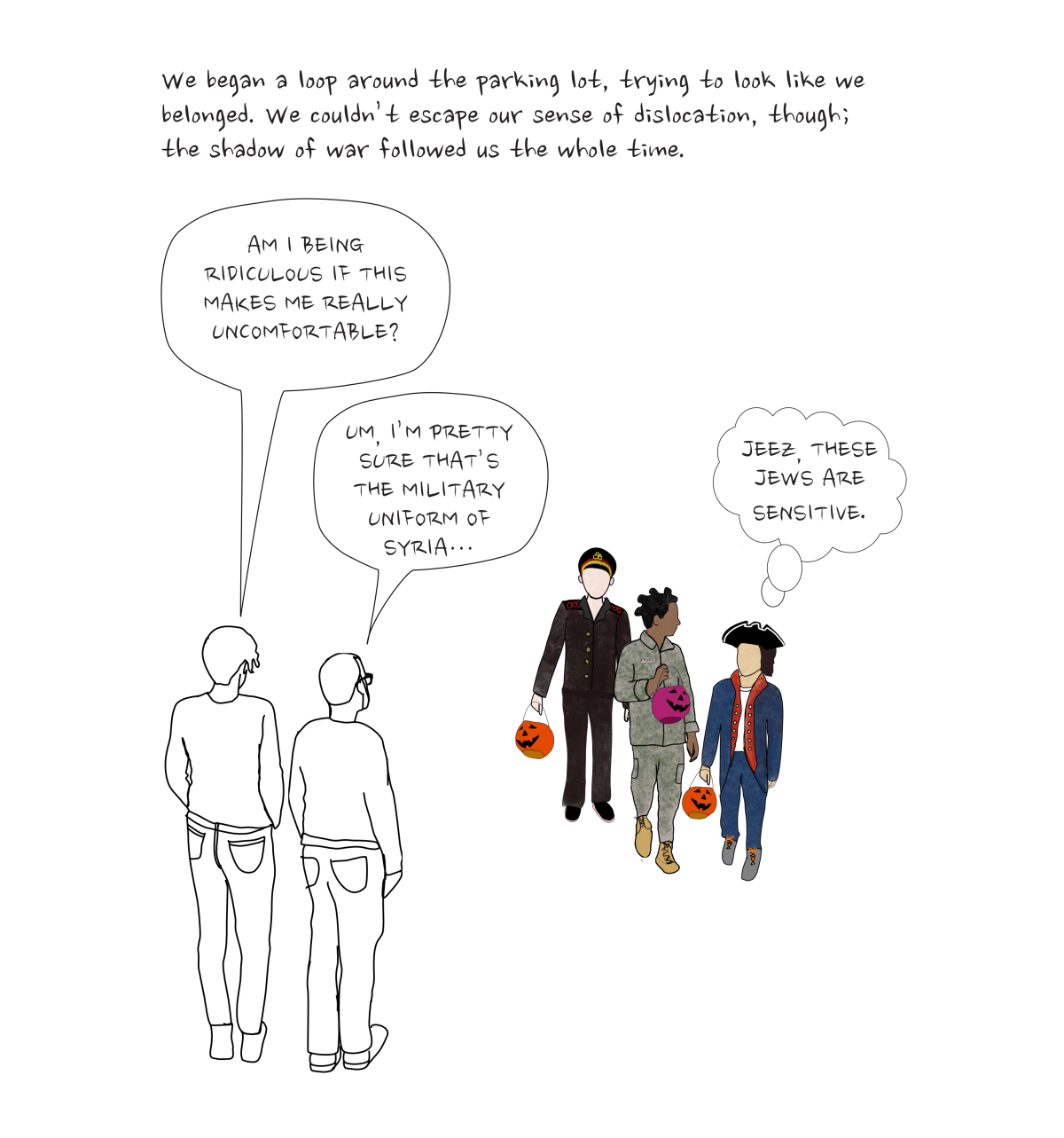
A panel from the comic/essay "Haunt­ings: Look­ing Back at Fall 2023" by Abby Horowitz. The image shows two adults (rendered as black-and-white outlines) looking at three children in military-esque Halloween costumes. The caption reads: "We began a loop around the parking lot, trying to look like we belonged. We couldn' t escape our sense of dislocation, though; the shadow of war followed us the whole time."

One adult says "AM I BEING RIDICULOUS IF THIS MAKES ME REALLY UNCOMFORTABLE?"

The other adult answers "UM I'M PRETTY SURE THAT'S THE MILITARY
UNIFORM OF SYRIA..."

A thought-bubble above the children reads "JEEZ THESE JEWS ARE SENSITIVE." 

https://www.jewishbookcouncil.org/pb-daily/hauntings-looking-back-at-fall-2023

UPDATE: we nuked $1.1 million in medical debt

Remember this project from last November?

Well, for those who like closure:

Y’all did it!

Just before Xmas we closed out the project, having raised a bit more than $10,000 with your help. The end result was the abolition of $1,114,133.50 in shitty medical debt, freeing 2,006 Michiganders across 17 counties from one more dumb late-stage capitalism headache:

Bummed that you missed out on this project? Then I have excellent news:

You and your pals can start your own! The folks at RIP Medical Debt are super sweet and helpful, and it’s a blast.

I want that to be the takeaway here: there are plenty of religious and moral and political and ethical reasons to work on a project like this, but I still believe the best reason to do it is that it is fun. Every day, multiple times each day, it would occur to me: We’re going to nuke a million dollars of medical debt. And just that thought, that a bunch of us regular folk going about our regular lives could do just a little something more and move such a big goddamn rock—it’d make me laugh. It literally tickled me, that notion. And it worked! And that cracks me up, every time it comes to mind.

Good job, all! When you start your project and need a little dough to nuke a little bad medical debt, hit me up.

A Holiday Tip for Gentile Schoolteachers with Jewish Students🎅🏿🕎

This is always a fraught time of year for grade-school music teachers: they wanna sing Xmas songs, most of the kids wanna sing Xmas songs. But they know that the constant wintertime Othering grinds away at the Jewish kids. (It’s even worse when teachers try to “include” you be singing the “Dreidel Song”; that song is crap, and we know it. The Xmas songs are way better.)

Back during the pandemic I eavesdropped on the most brilliant piece of classroom third-rail navigation I’ve ever seen in my life, and I wanna share it here again, for any that need help (esp. in what’s become an extremely fraught year for Jewish kids in America).

This was early in the pandemic, when our community was pretty locked down (my kids didn’t have in-person school for 400+ days). My daughter was then a third grader, and I was sitting nearby during her Zoom music class (we’ll leave for another day any discussion of the crime against humanity that was “grade-school Zoom music class”).

A few slides into the lesson, the teacher show a picture of an unremarkable middle-aged White dude, “Mitchell Parish.” 

Who the heck is Mitchell Parish? Well, he was born in Lithuania, and brought here by his parents, who were Jews (my daughter immediately perked up; Jews! Like us!) looking for a better life. Mitchell Parish was a popular songwriter in New York in the ‘20s, ‘30s, and ‘40s—and he wrote the lyrics to …

*advance to next slide* 

Sleigh Ride”!  

*kids sing “Sleigh Ride”* 

*EVERYONE IS A WINNER!*

My daughter felt seen, gentiles got their Christmas carol, and no one had to sing the goddamned “Dreidel Song.” 

So there’s the trick to getting to sing Christmas carols in public school in what has been the worst year for Jews since 1945:

Start out with a brief bio of the Jews who wrote your Xmas song

You could do a whole Winter Concert—featuring “Rudolph, the Red Nosed Reindeer,” “A Holly Jolly Christmas,” “Rockin’ Around the Christmas Tree,” and “Run, Run Rudolph”—on just a single bio slide: All four of those classics were written by the same Jew (the inimitable Johnny Marks, whose Jewish brother-in-law was the guy who created Rudolph to begin with).

(SPOILER ALERT 🚨: All your favorite Xmas songs were written by Jews; you’re welcome).